
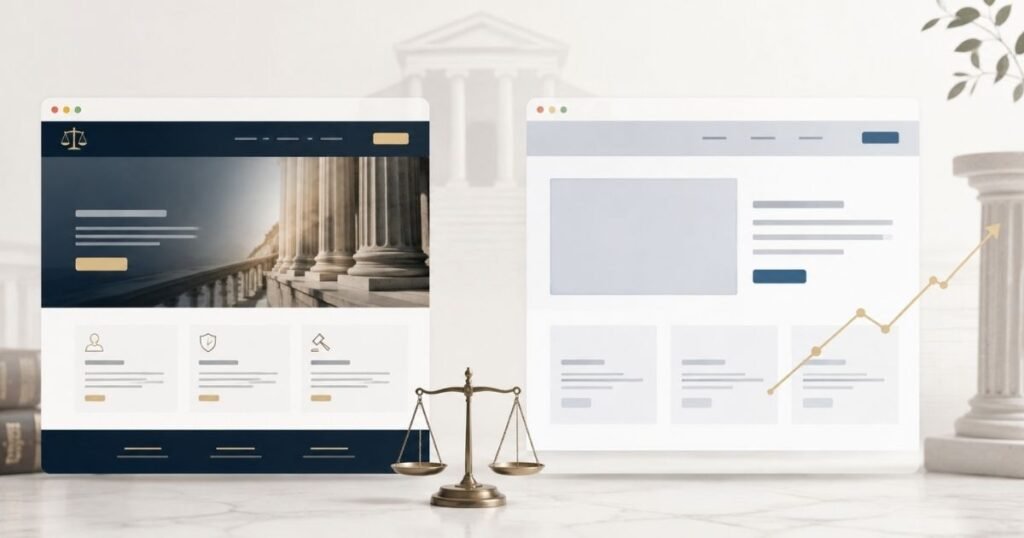
A worse looking site can still outrank yours in search results. Visual polish alone does not guarantee higher rankings. Real ranking success depends on search relevance, not visual polish. A page that better meets the searcher’s need can outrank a more visually polished page.
Competitors often beat stronger designs by covering what matters more to searchers. A competitor law firm ranking higher usually solves the query more completely. A site does not need a better looking website to outrank you.
Understand What Actually Drives Rankings
Google Ranks More Than Website Design
Search engines weigh many signals beyond how a page looks. Search relevance and content usefulness carry far more weight than layout. Matching search intent correctly often decides the outcome before design even matters. Broad coverage can make a page more complete and useful when the material genuinely addresses the user’s needs.
Relevant expertise, reliable information, and trustworthiness can contribute to the quality Google’s systems look for, especially for legal topics. Internal links help users and search systems discover related pages and understand how they connect. Local relevance pulls weight for any location based legal search. Technical accessibility ensures none of these signals go unseen by crawlers.
Separate Design From Search Performance
A polished professional appearance builds trust once a visitor arrives. Search visibility works differently, built through relevance rather than aesthetics. Matching search intent still outweighs any visual upgrade a firm makes.
Information accessibility often separates a ranking page from a beautiful one. A client focused experience wins trust even inside a simple design. Firms chasing design upgrades often skip the fixes that matter most.
Find Where Your Competitors Are Winning
Find Your Competitor’s Ranking Queries
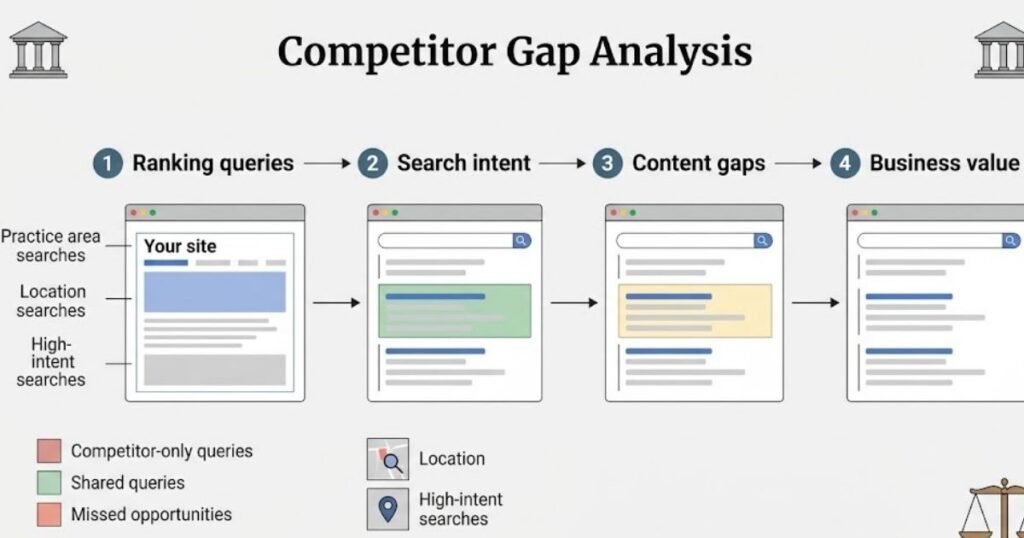
Start by identifying queries where competitors rank and your site does not. Look for shared queries your site already ranks for too. Note competitor only queries showing up nowhere on your site. If you have historical Search Console data, lost queries can reveal terms you once ranked for. Moz’s Competitive Research guide teaches how to identify competitor gaps.
Sort these findings into clear categories for faster review. Practice area searches often reveal the biggest content gaps. Location searches show where local relevance needs real work. High intent searches deserve the closest attention of all, since they carry real business value.
Compare Search Intent Behind Each Query
Every query hides a clear searcher goal behind the words typed. Infer the dominant search intent from the page types and results currently ranking. Note which ranking page answers that intent most directly. Each page connects to a specific entity tied to the query.
Page type matters just as much as topic coverage here. User expectation shapes what kind of page should rank at all. This full chain follows a clear pattern worth remembering.
Study Your Competitors’ Content Depth
Compare Topic Coverage And Depth
Read a competitor’s top page slowly, noting every subtopic covered. Important subtopics often reveal what your own page skips entirely. Real client questions get answered directly, not brushed aside. Specific legal issues get explained with real context, not vague summaries.
When comparing depth, check for:
- Unanswered client questions your page leaves out
- Jurisdiction specific explanations relevant to the practice area
- Procedural detail readers need to act on the information
- Original examples tied to real situations, not generic ones
- Claims backed by sources rather than left unsupported
Relevant entities and supporting concepts tie the whole page together clearly.
Find What Your Page Doesn’t Explain
Study exactly what the competitor explains that your page does not. Look for:
- Questions they answer that visitors actually search for
- Useful information they provide beyond the basics
- First hand expertise that separates a strong page from a copied one
- Original information competitors cannot easily replicate
These gaps reveal missing opportunities inside your own content. Closing a meaningful gap can make the page more useful and competitive, though ranking outcomes still depend on the wider search results and other signals.
Study the Page Structure of your Competitors
Compare Competitor Page Types
Search results often reward one page type over another for a query. Practice area pages compete differently than general attorney pages do. Location pages serve local searches that broader service pages cannot. Educational resources and guides often win purely informational searches instead.
Matching page type to the query matters as much as content quality. If the current results are dominated by guides, a service page may be misaligned with the dominant intent. Study which page type wins consistently across your target queries. This pattern often points straight to your biggest structural gap. Reviewing real SEO Case Studies shows how weaker sites still manage to outrank stronger looking competitors.
Match Content To Client Needs
Every legal search starts with a real client problem behind it. That problem connects to a specific legal matter needing resolution. A relevant service should answer both clearly on the same page. Name the attorney and location handling that exact matter.
Show the next step a visitor should take after reading. Make sure the page names the attorney and location handling the matter, and shows the visitor a clear next step.
Compare Competitor Expertise and Evidence
Evaluate Their Legal Expertise
Review a competitor’s stated attorney experience for real specificity. Note their practice area expertise tied to the exact service offered. Check whether the page clearly identifies the relevant attorney and gives enough background for readers to understand their expertise. Listed credentials should connect directly to the practice area shown.
Professional recognition adds context that generic claims cannot provide. Relevant case experience matters more than years of practice alone. Clear author information on every article builds real trust fast. Missing author details often signal thin, unreliable content instead.
Check Their Evidence And Reputation
Review the credibility signals a competitor’s page relies on:
- Real reviews, which carry weight marketing copy cannot match
- Genuine testimonials with specific, trusted detail
- Case results shown with real context
- Citations to outside sources backing factual claims
- External mentions from other sites
- Professional associations listed on the page
Evaluate The Site Architecture
Map Their Important Pages
Study how a competitor connects their firm to every service offered. Note how attorney pages link back to each practice area. Where relevant, connect legal matters to a location page, though not every query is location specific Supporting content should surround these core pages, not sit isolated.
Contextual links tie everything together into one coherent structure. Strong hub pages organize this network for both readers and crawlers. This pattern follows one repeating relationship worth studying closely.
Compare Your Site’s Topic Structure
Many firms build isolated important pages with no real connections between them. Supporting content often sits unlinked, disconnected from the pages it should help. Practice area relationships and location relationships need clear internal paths. Weak internal linking leaves strong pages invisible to both readers and crawlers.
A real semantic site structure connects every page through meaningful relationships. Link volume matters less than the quality of each connection made. Link quality and relevance matter more than simply increasing the number of internal links. . Fixing this structure alone often closes a significant ranking gap.
Analyze the Local Signals
Evaluate The Local Presence
Check a competitor’s local presence across these signals:
- Google Business Profile completeness and activity
- Review count and how new ones arrived
- Local citations across directories
- Clear attorney to location associations
- Dedicated local landing pages versus a single generic contact page
- Consistency of business information across every listing
Inaccurate business information can make it harder for Google to understand and surface the correct business.
Check Their Local SERP Visibility
Run these search variations and note who appears each time:
- Practice area + city
- Attorney + city
- Lawyer + city
- Legal service + city
Each variation can reveal a different competitor. Also check the local pack, maps results, and localized organic results below the map for the same terms — the organic results below the map often get overlooked. Weak local visibility in even one area creates an opportunity.
Check Technical And Experience Factors
Compare Search Accessibility
Review your technical setup against your top competitor’s, covering:
- Crawlability and indexability
- Canonicals and redirects for accidental blocking or confusion
- Internal links reaching every important page without dead ends
- Rendering issues that could hide strong content from search engines
Page experience can contribute to ranking success, but Google still prioritizes relevant content even when experience is weaker. These issues often go unnoticed until traffic quietly drops. A technically clean site simply gives strong content a fair chance to rank.
Compare The User Experience
Clear navigation helps visitors find what they need without frustration. Simple page structure and strong readability keep visitors reading longer. Mobile experience shapes first impressions more than any other factor now. Contact accessibility should never require more than a click or two.
Information hierarchy guides visitors naturally toward the answer they want. Page speed affects both patience and trust within seconds. A simpler competitor can easily outperform a more visually sophisticated website.
Build Your Action Plan Accordingly
Decide Why They Are Winning
Once you’ve compared queries, content, expertise, structure, and local presence, match what you found against the likely explanation before deciding what to fix.
| What you observe | Likely area to investigate |
| Competitor uses a different page type | Search intent mismatch |
| Competitor answers more questions | Content completeness gap |
| Competitor has clearer authorship | Trust/expertise gap |
| Competitor dominates local pack | Local relevance/prominence |
| Your page has indexing issues | Technical problem |
| Content/intent similar, design differs | Design likely isn’t the real explanation |
Separate Their Strengths From Weaknesses
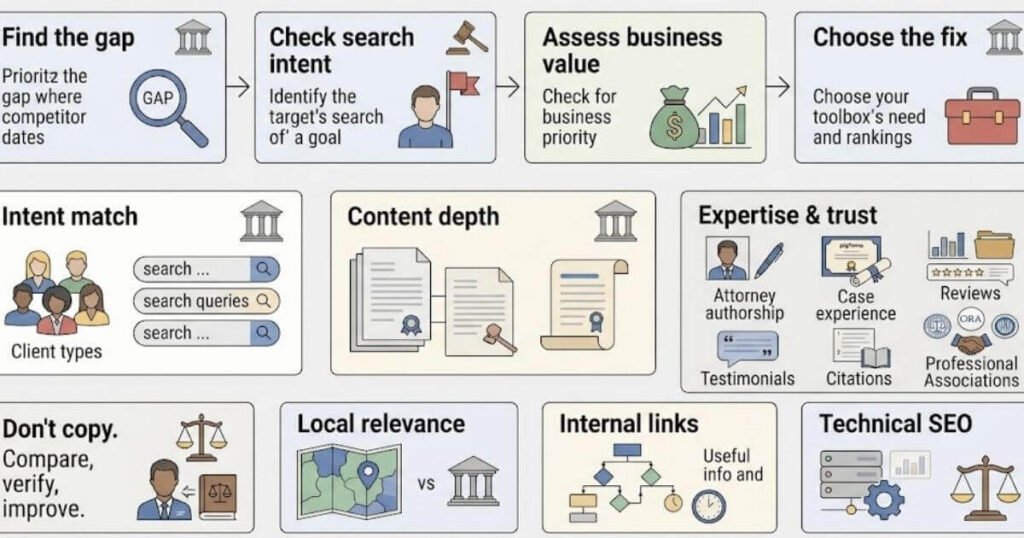
Not every competitor advantage deserves equal attention right away. Break down where they actually win:
- Search intent match
- Content depth and any real information gain
- Expertise and trust signals
- Local relevance
- Internal linking and technical SEO
- User experience compared with your own site
Some advantages matter more than others depending on your market. This honest breakdown shapes exactly where to focus first.
Prioritize Gaps By Search Value
Rank each gap by real business value, not just visibility. Weigh search demand against genuine case potential for each query. Some gaps represent a stronger opportunity based on search demand and business value. Though ranking outcomes still depend on the wider result set, others sit lower in priority due to weak existing authority.
Factor in real resource requirements before committing to any fix. Don’t copy everything a competitor does just because it works for them. Focus instead on changes offering greater relevance and value to your own visitors. This approach turns competitor research into a real, workable plan.
Frequently Asked Questions
Why Does My Competitor Rank Higher?
A competitor usually ranks higher because their page better satisfies search intent. Stronger relevance to the exact query often explains the gap more than design or size ever could.
Can A Smaller Law Firm Outrank A Larger Firm?
A smaller firm can outrank a larger one when its page is a better match for the query and performs well across the relevant ranking systems
Does Better Website Design Improve Rankings?
Design/page experience can contribute to search success, but a visually polished design doesn’t guarantee higher rankings. Google still seeks the most relevant content. Improved rankings usually come from relevance and content strength, since design alone does not guarantee ranking success.
How Do I Compare My Law Firm Competitors?
Compare law firm competitors through their queries, content depth, expertise, and technical setup. A structured competitor gap analysis reveals exactly where they win and where you can catch up.
Should I Copy A Competitor’s Content?
Copying competitor content rarely produces lasting results. Focus on identifying gaps instead of copying, since original value is tied to your own expertise.
Find The Gaps Your Competitors Leave Open
Every competitor leaves some gap open in their strategy. Design differences rarely explain a ranking gap on their own. Compare the queries, page types, content depth, evidence, and local presence behind the pages that outrank you at faheembhatti.com today, and see exactly where your firm can move ahead.
