

Real trust signals matter more on a criminal defense attorney website. Readers need clear attorney identity, real qualifications, and genuine experience. They need a clear practice focus and location too.
Good legal information and honest client experience details matter just as much. Every claim deserves real backing, since this is a high stakes situation tied to a time sensitive decision. Missing or unverifiable information is a common reason prospective clients lose confidence in a firm’s site. Reviews, badges, and testimonials only work as part of full trust layers, never alone.
Start With Verifiable Attorney Identity
Verifiable identity works as the true foundational trust layer on any legal site. Readers need to know the responsible party behind every legal service offered. Clear legal information should always answer one simple question, who the attorney actually is.
Real accountability starts right here, before anything else on the page matters. Reviewing a full law firm SEO audit can help identify where this identity work is missing.
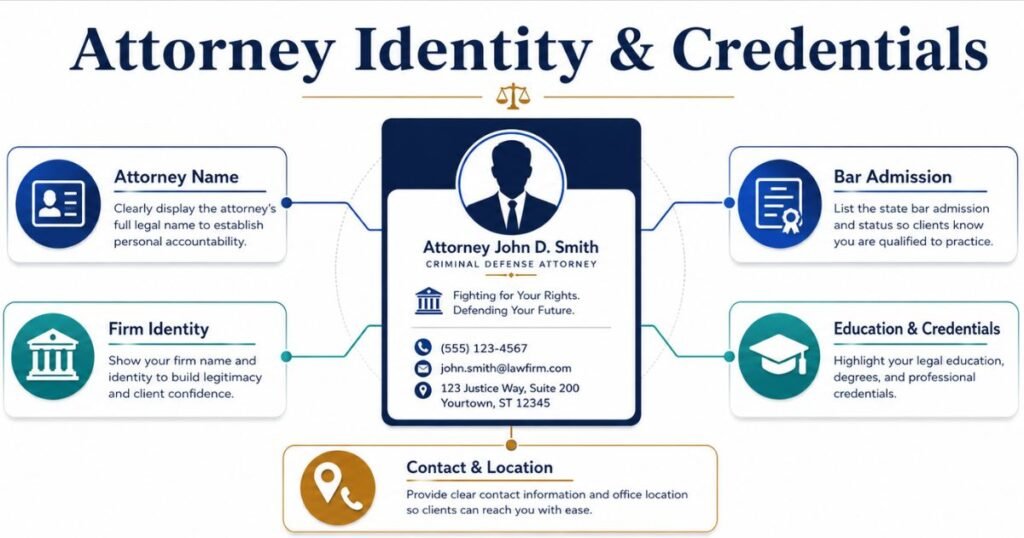
Make the Lawyer Behind the Site Clear
State the attorney name and firm name clearly, right up front on the page. Add a real professional biography and working contact information near it. List a real physical office and location too, not a vague service area. Name the responsible author or reviewer behind the content itself.
Keep this consistency across professional profiles and other authoritative sources online. Mismatches quietly break trust fast, even small ones like a wrong title.
Show Credentials Without Turning Them Into Claims
State the jurisdiction and confirm bar admission clearly on the page. Add real education history and any relevant certifications the attorney actually holds. List real memberships, honest years in practice, and a clear practice area focus. Keep this tied to professional organizations and specific credentials, not vague self praise.
Back up every verifiable credential claim with proof, not just a listed title. A bare experienced attorney claim means little without real evidence behind it.
Demonstrate Criminal Defense Expertise
Real subject matter expertise shows through detail, not slogans on a homepage. Readers need meaningful knowledge about real criminal matters, not a thin practice areas listing.
Content should speak directly to real client problems and real concerns. This is where genuine demonstrated expertise either shows up clearly or quietly falls flat.
Build Depth Around Real Criminal Matters
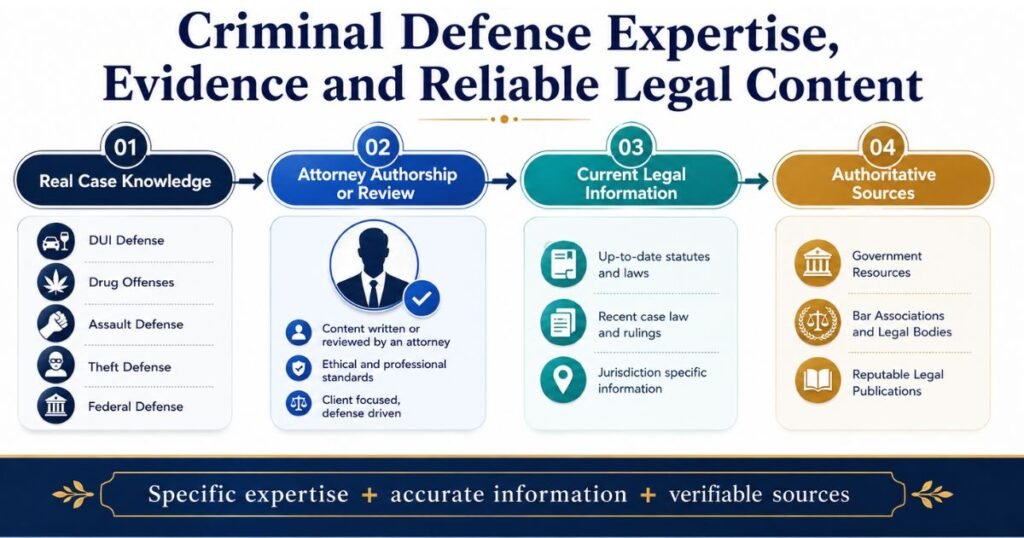
Cover real case types clearly, one at a time, without vague summaries. Address DUI, DWI, drug offenses, assault charges, and theft offenses directly on the site. Add domestic violence and white collar crimes too, since these carry different concerns.
Cover felony defense, misdemeanor defense, and federal criminal defense as separate topics entirely. This kind of real practice specific expertise shows a firm that actually handles these cases.
Make Attorney Experience Specific
Describe real types of cases handled, with enough detail to feel genuine. Mention actual courtroom experience and the specific jurisdictions served by the attorney. Show genuine procedural knowledge through real detail, not borrowed legal jargon.
Skip exaggerated success claims like a vague best criminal lawyer label on the homepage. Avoid guaranteed results entirely, since no honest attorney can promise an outcome. Unsupported claims damage trust faster than almost anything else on a legal site.
Make Legal Content Reliable and Useful
Real informational content should serve prospective clients first, not search engines alone. This builds genuine content trust through real accountability and honest, observable expertise. Vague, generic writing rarely earns lasting trust from a worried reader. Specific, accurate content does earn that trust, page after page.
Identify Who Writes or Reviews Legal Content
Name clear attorney authorship or confirmed attorney review for every page published. Add short author biographies near each piece so readers know who wrote it. Include a real publication date and an honest update date on every page. This shows true editorial responsibility, the kind that matters most for legal topics.
E-E-A-T for YMYL law firm content is especially important because readers need reliable information they can verify. Google’s Search Quality Rater Guidelines explain exactly how reliable information helps human evaluators judge real content quality.
Keep Legal Information Accurate and Current
Confirm accurate statutes and correct legal terminology throughout every page on the site. Keep everything tied to real jurisdiction specific information, not generic filler text. Watch closely for outdated legal information sitting quietly on old, forgotten pages.
Lean on authoritative legal sources and real government sources for backing every claim. Skip generic AI generated explanations with no real expert review behind them.
Use Case Results Without Damaging Credibility
Case results need careful handling on any criminal defense website built today. Poor framing creates real misleading impressions fast, even with good intentions behind it. Share documented case experience honestly, with full context attached to every example given. A result without context tells a reader almost nothing useful or accurate. Testimonials and guarantees carry real risk here too, more than most firms realize. Avoid any implied outcome promises without proper context and clear disclaimers attached nearby.
Never suggest a future result guarantee, even as a simple conversion element on a page. That kind of promise carries a genuine ethical risk for the firm. ABA Model Rule 7.1 governs lawyer communications on exactly this point directly. It bars false claims and misleading claims, including material misrepresentations and misleading omissions. Every firm should know these attorney advertising rules before publishing any result online.
Strengthen Trust Through Independent Evidence
Real reviews and honest client feedback matter, but they work best alongside outside proof. Check listings on reputable legal directories and confirmed bar association profiles regularly. Professional organizations and independent citations add real weight here, beyond a firm’s own website. A firm cannot vouch for itself as convincingly as a third party can.
Keep consistent attorney information across every referring website the firm appears on. Remember that first party claims carry less weight alone than solid third party evidence. A biography on the firm’s own site matters, but an outside listing confirms it. Readers trust that second confirmation more than they trust the original claim.
Make the Website Safe for Potential Clients
Confirm real HTTPS and basic site security first, before anything else gets built. List clear contact methods and a real privacy policy on every page. State honest confidentiality expectations plainly, especially for sensitive legal matters like criminal charges. A reader facing a criminal charge needs to trust the site before they type anything.
Use a secure intake process for any sensitive case information collected through a form. Avoid unsecured forms entirely during the enquiry process, no matter how small the form seems. This matters even more for topics like arrests, active charges, or ongoing investigations. A leak here does more damage than almost any other technical mistake.
Align Local and Professional Trust Signals
Keep a consistent firm name, address, and phone number everywhere online without exception. List real service areas clearly too, tied to actual neighborhoods and courts served. Match the Google Business Profile to the site exactly, down to small details. A mismatch here confuses readers, and inconsistent business information is generally considered unhelpful for local search visibility.
Confirm listings on local legal directories and real bar association information agree. Keep attorney profiles on external profiles consistent with the site’s own attorney identity. Tie the firm entity, location, and practice area together through matching external references. Consistency across every listing builds one clear picture instead of several conflicting ones.
Remove Signals That Undermine Trust
Watch for anonymous legal content with no named author anywhere on the page. Fake testimonials or unverifiable testimonials damage trust fast once a reader spots them. Cut unsupported superlatives and any guaranteed outcomes language from every page on the site. These small phrases quietly undo months of careful, honest content work.
Fix outdated attorney biographies and broken links across the site before they pile up further. Watch for contradictory contact information and thin practice area pages too, since both confuse readers. Trim excessive stock imagery and aggressive sales language wherever it still appears. Clarify any unclear ownership of the firm or its content immediately. For a deeper look at building this out fully, explore our law firm SEO guide.
Separate Trust From Design
A modern design does not equal real legal credibility, no matter how polished it looks. Flashy badges and claimed expertise mean little without proof standing behind them. Real attorney trust comes from reviews, genuine legal competence, and honest content, not decoration. Design choices alone cannot substitute for real evidence a reader can check.
Schema markup helps machines read a page, but it cannot build trust alone either. This kind of myth busting matters, since design polish often gets mistaken for real substance. A beautiful site with thin, vague content still fails the trust test every time. Readers notice the gap between polish and substance faster than most firms expect.
How to Audit Trust Before Publishing
Use a simple practical decision framework before anything goes live on the site. Start with identity verification, then move to real expertise demonstration across every page. Check for solid evidence support and clear safety communication next in the process. Skipping a step here usually shows up later as a trust gap readers notice.
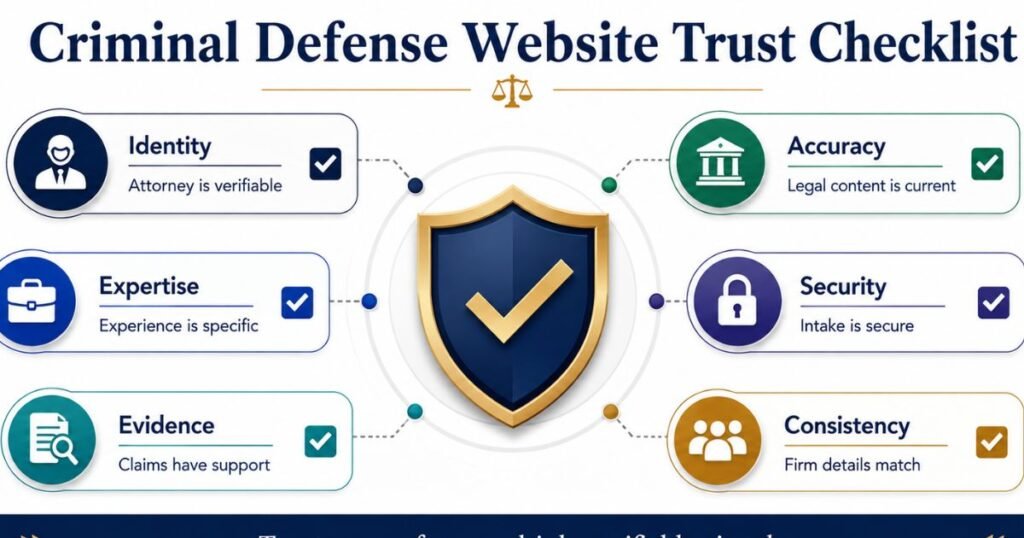
Run a full consistency check across the site before publishing anything new. Confirm any cited material links back to trusted external sources, not random pages. Never lean on one powerful signal alone, since trust comes from several signals together. A single strong credential cannot carry the whole weight of a reader’s decision.
Frequently Asked Questions
What is the most important trust signal for a criminal defense website?
Verifiable attorney identity matters most. Demonstrated legal expertise, accurate information, and independent evidence build the real foundation around it.
Should criminal defense websites display case results?
Yes, with care. Use case results through accurate presentation and appropriate context, never creating unjustified expectations about future outcomes.
Do client reviews improve trust for criminal defense attorneys?
Yes. Genuine reviews carry real credibility value, but they work as one trust layer alongside verified attorney credentials and accurate content, not alone.
Does EEAT directly improve criminal lawyer rankings?
Not directly. It supports quality understanding, not a single technical ranking factor. Reliable information simply helps search systems judge quality overall.
What should every criminal defense attorney website show?
Show clear attorney identity, credentials, practice areas, and location. Add real contact information, responsible content authorship, and accurate legal information. Include genuine evidence of experience and clear privacy and security information.
Start Building a Website People Can Verify
A truly verifiable website ties attorney identity, credentials, and real practice focus together. Add honest location details, accurate legal information, and a clear client experience throughout. Every claim on the site should trace back to real proof somewhere on the page. Ready to build real trust into your firm’s website? Visit faheembhatti.com today and see how a verifiable, expertise driven site earns clients who actually call, trust, and stay loyal.
