

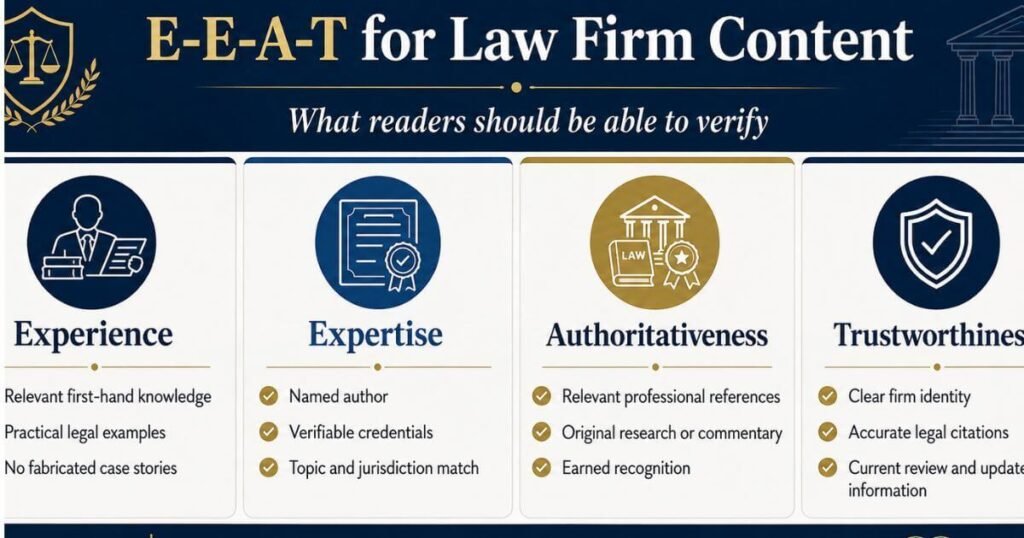
E-E-A-T stands for Experience, Expertise, Authoritativeness, and Trustworthiness. Legal content sits inside YMYL, short for content touching money or life. That covers legal information tied to rights, finances, family, liberty, and immigration.
These topics carry serious outcomes, so credibility matters more here than on a normal blog. E-E-A-T is not one single ranking factor on its own. It comes from the Search Quality Rater Guidelines. The framework Google uses to train human evaluators on what makes content trustworthy. Search Central guidance points toward people first content, built on real first hand knowledge.
Why Legal Content Faces a Higher Trust Standard
The legal industry deals with a unique legal position most other industries never face. Readers often face real life decisions while reading a page, not casual browsing. Law firm content works like informal counsel for a scared reader searching late at night. Inaccurate information, outdated information, or misleading information can cause real harm.
This raises both content level credibility and website level credibility at the same time. A single wrong statute or outdated deadline can cost a reader options. That risk sits behind every page a law firm publishes, whether readers notice it or not. Legal writers carry a heavier responsibility than most other online content creators ever do.
Legal Accuracy Is More Than Good Writing
Grammatically correct content can still be wrong in ways that matter to a reader. It takes legally accurate content to actually help someone facing an important decision. Properly sourced content and contextually appropriate information matter far more than clean sentences alone. Polished grammar cannot fix a citation to the wrong statute or year.
This writing quality distinction separates a polished page from a genuinely useful one. A firm building out its full content plan can review our content marketing services page for a deeper look at building accurate, structured legal content at scale. Strong legal writing blends clean sentences with real subject accuracy. Neither one works well without the other sitting right beside it.
Trust Applies Beyond Individual Articles
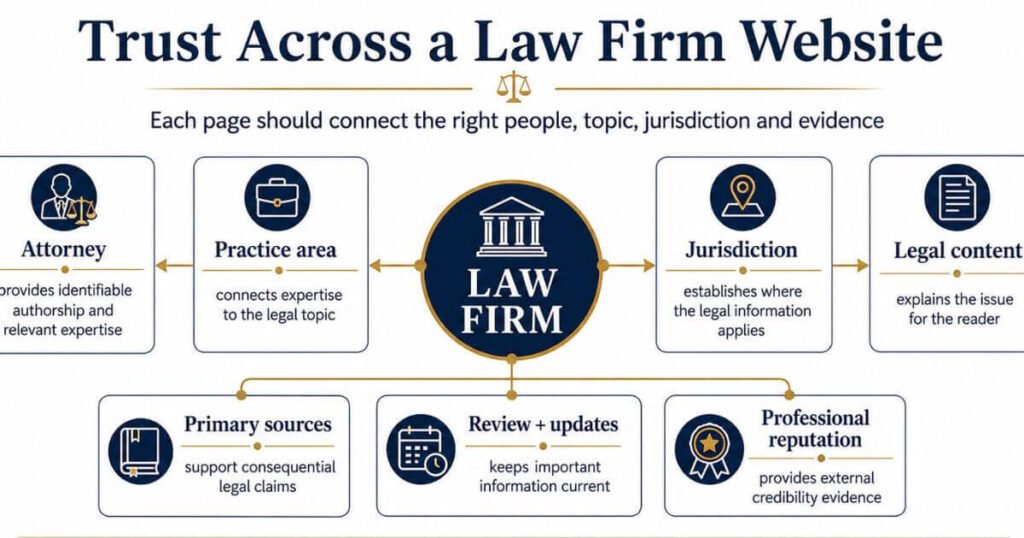
Verifiable attorney identity and clear firm identity support trust site wide, not page by page. Practice area specialization and working contact information matter just as much as the writing itself. A visible editorial process and review process build confidence for a cautious reader. These signals work together across the whole site rather than being checked once in isolation.
Website reputation grows from this broader credibility context, not one strong article alone. A single excellent blog post cannot carry a site with weak attorney pages behind it. A simple author bio checklist helps confirm the basics are covered on every page. Consistency across the whole site matters more than brilliance on any one page.
How Experience Changes Legal Content Quality
First hand knowledge and relevant experience set strong content apart from generic writing. Weak pages just keep repeating information other sites already say in different words.
Show Genuine Legal Experience
Attorney authored insights and honest practical examples carry weight with a careful reader. Case related lessons, written in an ethically appropriate way, help readers understand what actually happens. A clear legal process explanation grounded in actual situations builds trust fast on any page.
Skip invented personal experiences entirely, since fabricated stories damage credibility the moment they get noticed. A reader can often sense a made up example within a sentence or two. Genuine experience reads differently than a story built just to sound convincing.
Separate Experience From Case Claims
Never reveal confidential case information, even to sound credible on a busy practice page. Manufactured case studies built just to appear authoritative cross a real ethical line quickly. Anonymized examples and generalized examples work far better and stay safe for everyone involved.
Avoid guaranteed outcomes entirely, no matter how strong a past case result looked. Firsthand knowledge and honest practical insight protect both originality and user trust. That balance keeps a firm’s content useful without putting any real client at risk.
What Expertise Looks Like on a Law Firm Website
Professional knowledge shows through specific detail, not broad statements about the law. Confirmed attorney credentials and clear practice area specialization back that up directly on the page.
Make the Author’s Credentials Verifiable
State the full author identity clearly at the top or bottom of every page. Confirm bar admission and list practice areas and professional background details next to it. Link out to a real attorney profile through solid professional information links wherever possible.
A clear author box helps here, though it works as one honest signal among several, rather than a ranking guarantee on its own. Readers still check for a name and a verifiable credential before they trust a page fully.
Match Expertise to the Legal Topic
Criminal defense expertise should come from someone who actually practices it, not a generic marketing writer. Every legal topic deserves a clear match between author and subject matter. A family law page written by a personal injury attorney reads thin fast to a careful reader.
Formal attorney review matters even more for content written by a non attorney. Match content subject to genuine author expertise, based on the right jurisdiction and the actual user need behind the page.
How Law Firms Build Authority Beyond Their Website
Authority never comes from one simple backlink metric sitting alone on a dashboard. It grows from a recognized professional identity and a genuinely legitimate firm presence online.
Relevance Matters More Than Raw Link Volume
Relevant legal references beat a pile of random links every single time a firm compares them. Local recognition and genuine community recognition count for meaningful weight too, especially for smaller firms. Look for mentions from professional sources and respected industry publications tied to the practice area.
This kind of contextual evidence matters far more than a stack of unrelated backlinks ever could. A mention from a respected bar association generally carries more weight than a generic directory listing.
Build Authority Without Manufacturing It
Authority comes from earned mentions, published original research, and thoughtful legal commentary over time. Genuine professional contributions and useful resources add to this naturally, without forcing the process. Avoid artificial link schemes and messy irrelevant guest post networks entirely, no matter how tempting the shortcut looks.
Fabricated credentials and other manipulative reputation signals put the whole site at risk. One discovered fake credential can undo years of otherwise honest, careful work on a site.
Why Trust Is the Strongest E-E-A-T Layer
Trust is one of the most heavily emphasized qualities in Google’s Search Quality Rater Guidelines, particularly for YMYL content. Trust comes from multiple trust layers working together across an entire site.
Make the Firm Easy to Verify
Confirm firm identity with working physical contact information listed clearly on the site. List genuine attorney profiles tied to a clear jurisdiction and specific practice areas. Keep consistent business information everywhere it appears online, from directories to social profiles.
Clear ownership of the firm and its content removes any lingering doubt for a nervous reader. A reader who cannot confirm who runs the site rarely stays long enough to call. These trust signals for criminal defense attorney websites should make the firm and its attorneys easy for readers to verify.
Cite Legal Information Carefully
Point back to statutes, verified government sources, and actual courts wherever a claim needs support. Bar associations and other official legal resources count as strong sources too. Watch closely for date sensitive legal information that can quietly go stale within a year or two.
Transparency and careful citation accuracy protect the reader from bad advice. A firm that cites its sources openly signals confidence, not just careful writing habits.
Show What Happens When Content Changes
List a clear publication date alongside meaningful update dates on every important page. Flag any outdated law reviews the moment they appear anywhere on the site. Build a clear correction process for mistakes, rather than quietly editing pages without any note.
Ongoing attorney review and steady content maintenance show a firm that actually keeps its content current. Readers trust a page more once they see it was checked recently, not years ago.
How E-E-A-T Works Across a Law Firm Website
E-E-A-T connects the attorney entity to the law firm entity itself across the site. That connects further to practice area, location, content, sources, and firm reputation together. This forms a site level relationship, not a set of scattered individual blog posts. Every page should reinforce the ones around it, not sit completely on its own.
Practice Pages Need More Than Keywords
A strong page should clearly answer who provides the service and what the practice covers. State the relevant jurisdiction plainly, right near the top of the page. Show attorney expertise tied to actual client questions readers actually search for.
Back every claim with supporting evidence, not just a confident sounding sentence. This kind of depth separates a genuine page from a placeholder built just to rank.
Blog Content Should Strengthen Practice Authority
Informational articles should connect directly back to relevant practice area pages on the site. Link out to relevant attorney profiles through solid internal links wherever the topic fits naturally. This builds topical coverage, not a pile of unrelated SEO posts sitting alone.
Every article should reinforce clear entities and attributes, not chase a random keyword alone. Semantic SEO helps connect related entities, topics, and practice areas across the site. A blog built this way strengthens the whole site instead of standing apart from it.
What Weak E-E-A-T Looks Like in Legal Content
● Anonymous legal content with no named author anywhere on the page
● Unsupported legal claims and outdated statutes
● Outdated procedures and generic AI generated explanations with no original value
● Copied or lightly reworded competitor content, treated as a spam pattern under Google’s own policies
● Unverifiable credentials, exaggerated case outcomes, and fake reviews
● Pages written for search engines instead of people
Trying to manipulate search rankings this way tends to backfire eventually.
How Law Firms Should Measure E-E-A-T
Review accuracy and sourcing on a set schedule, such as every quarter, rather than only when a problem surfaces. Check author transparency and overall content quality page by page across each practice area, noting which pages have a named author, a stated review date, and cited sources.
● Organic visibility and growth in branded searches over time
● Qualified organic enquiries, weighted above raw traffic from unrelated keywords
● Authoritative mentions and referring domain relevance tied to the legal field
● Content engagement and genuine usefulness, not just time on page
No one score captures all of this at once, so review these signals together rather than relying on a single number.
Separate E-E-A-T Evidence From Rankings
Treat E-E-A-T as a quality framework that shapes how content is judged, rather than a metric you can check off in a dashboard. It is not something that shows up as a clean E-E-A-T score anywhere in the Search Console. Firms searching for that single number usually end up chasing the wrong signal entirely.
Rankings and conversions still matter, but they sit inside a much larger overall SEO system. Strong E-E-A-T supports that system quietly, in the background, page after page. It rarely shows up as one dramatic jump, more as a steady, compounding advantage over time.
Does E-E-A-T Matter for AI Search Too?
Yes, AI generated search experiences still depend on reliable information behind every answer they give. Clear authorship and real factual accuracy matter just as much here as in normal search. As an SEO inference rather than documented Google guidance, clear entity information is widely believed to help these systems retrieve and present information more reliably.
There is no guaranteed AI citation mechanism, since this reflects a much broader information quality problem. No firm can promise a specific citation inside an AI generated answer. This remains an emerging area, and no firm can predict or guarantee how an AI system will use its content.
The E-E-A-T Priorities for a Law Firm
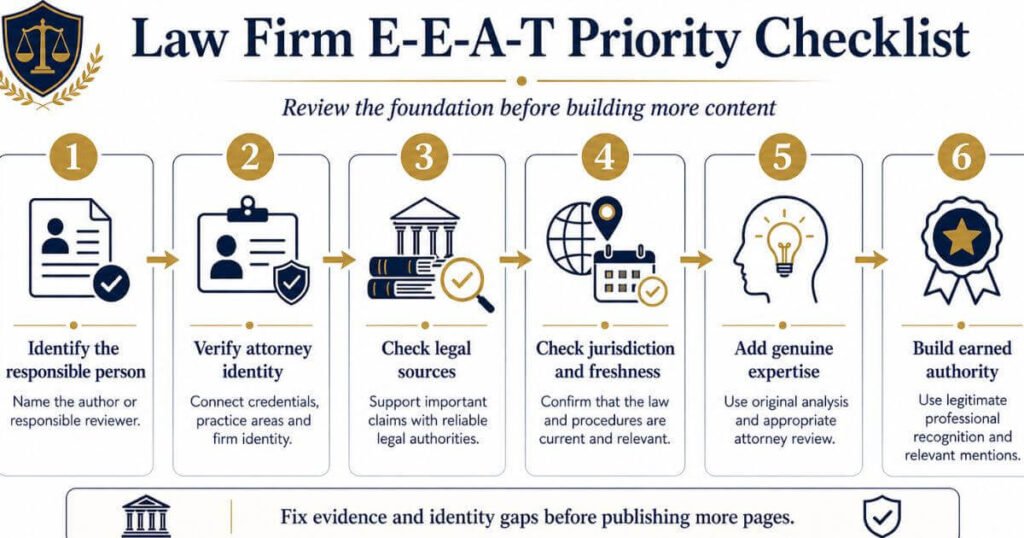
Follow this rough implementation hierarchy, since fixing the foundation first makes everything built on top of it stronger.
● Start with a clear responsible party behind the content on every single page
● Confirm attorney identity and verifiable credentials tied to a stable, consistent firm identity
● Build on reliable information backed by real sources, not borrowed or copied claims
● Keep legal accuracy current through regular updates and clear jurisdictional relevance across every page
● Add genuine expertise through original analysis and practical knowledge, reviewed by an appropriate reviewer
● Build external authority through professional recognition, editorial references, and legitimate mentions
Frequently Asked Questions
Is E-E-A-T a Google ranking factor?
No. The E-E-A-T framework works as a quality assessment lens, not one of the individual ranking systems. It shapes how quality gets judged, not a direct set of ranking signals.
Is legal content considered YMYL?
Yes. Legal information falls under YMYL because it touches on significant life outcomes. Google holds this kind of content to a higher credibility standard.
Does every law firm article need to be written by a lawyer?
No, not always. Authorship accuracy matters more than a strict rule. Content should represent expertise honestly, with appropriate expert review based on real subject matter dependency.
Can E-E-A-T improve law firm SEO?
Indirectly, yes. Strong experience, expertise, authority, and trust support core quality principles. There is no direct ranking boost, but real quality signals still help systems reward good content over time.
What should a firm do when a cited statute changes?
Update the page, note the change with a clear revision date, and have the relevant practice area attorney confirm the correction. Leaving outdated law on a page, even briefly, is one of the more damaging trust failures in legal content.
Build Legal Content People Can Trust
Legal SEO was never about publishing more pages. It comes from treating every piece of YMYL content with real care. Identifiable expertise, accurate information, and meaningful sources build genuine trust over time.
Readers deserve better informed decisions, and every page should earn its place against actual search queries, not just fill space on the site. Ready to build content people can actually trust? Visit faheembhatti.com and let’s put these E-E-A-T principles to work for your firm.
